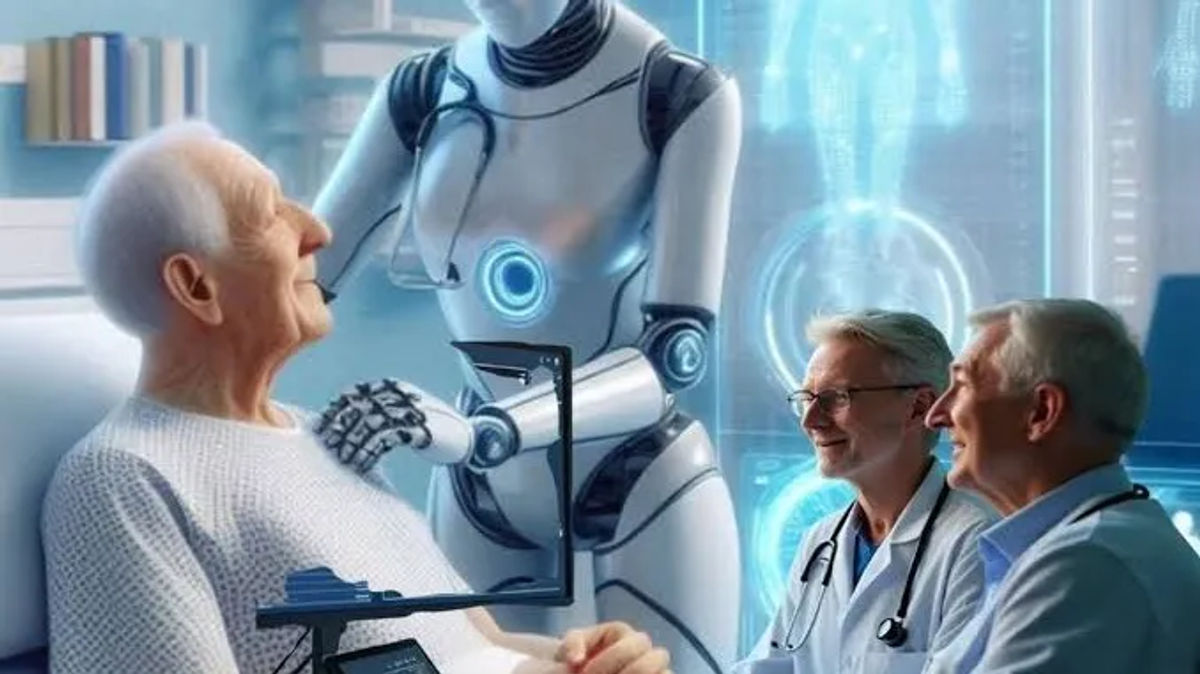
NEW DELHI: Continuous monitoring of patients after they are discharged from hospital can be a major challenge. The concern can be particularly high during the days following surgery, when a sudden deterioration in health may require immediate attention. Technology is now being used to develop systems that can provide patients with continuous medical monitoring while they remain at home. The facility may also be useful for elderly people and those experiencing sudden health-related problems.
The case of 63-year-old Charanjeet Kaur, a resident of Hari Nagar in Delhi, is one example. She was taken to hospital after suddenly losing consciousness, where tests found around 90% blockage in a major artery of the heart. She subsequently underwent bypass surgery. After being discharged about a week later, her family was concerned about how she could be continuously monitored at home.
The family therefore used a digital health-monitoring system at home. It includes a sensor patch attached to the body and a band worn on the wrist. These devices continuously record several health parameters and transmit the information to medical specialists located remotely.
The system can monitor indicators such as ECG, heart rate, oxygen saturation (SpO2), changes in heart rate, body temperature, activity and sleep. If an abnormal change is detected in any parameter, the medical team can contact the patient and provide guidance regarding necessary precautions or medical advice.
According to the family’s experience, the medical team also makes regular morning and evening phone calls and provides immediate advice when changes are observed in the health parameters. This gives patients and their families an additional layer of monitoring during recovery after returning home from hospital.
Another Delhi resident, 53-year-old Rakesh Bhardwaj from Naraina Vihar, also used such a monitoring system after experiencing a sudden rise in blood pressure. His blood pressure reached 200/130 and he also experienced a severe headache. His condition was subsequently monitored through health measurements and regular communication with the medical team.
The purpose of such technology is not to replace doctors, but to continuously monitor a patient’s condition outside the hospital and enable timely medical contact when required. Particularly during the initial days after discharge, such systems can provide patients and their families with an additional means of monitoring and support.