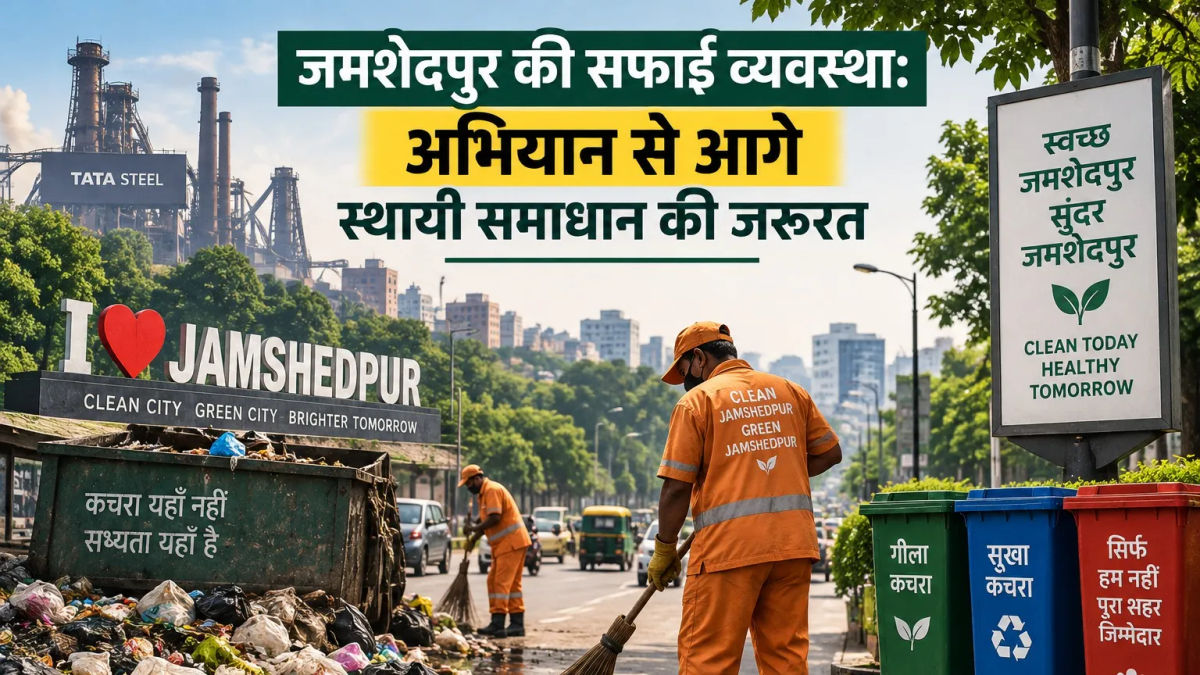
Jamshedpur is known as one of the country's major industrial cities. The city has also been discussed for its better civic facilities and organised urban infrastructure. However, with changing times, sanitation is becoming a challenge for the city, and this cannot be addressed only through cleanliness drives conducted from time to time.
In several areas of the city, problems such as garbage collection, drain cleaning, waste accumulating in public places and garbage around vacant plots can be seen. The situation becomes even more challenging in market areas and crowded places. Sanitation workers regularly carry out their duties, but gaps in the system sometimes outweigh their efforts.
The biggest problem is not only garbage collection, but also strengthening the entire system from the generation of waste to its final disposal. The practice of separating wet and dry waste at the household level has still not developed widely. When different types of waste are collected together, recycling and scientific disposal also become more difficult.
The role of citizens is also important along with the administration in improving the sanitation system. The tendency to treat roads, drains or public places as garbage bins needs to be stopped. For this, appeals alone will not be sufficient; along with awareness, effective monitoring and uniform enforcement of rules are also necessary.
During the rainy season, garbage accumulated in drains can make waterlogging and drainage problems more serious. This directly affects roads, traffic and the health of citizens. Therefore, drain cleaning should not be limited to special drives but should be carried out regularly and scientifically.
In a city like Jamshedpur, greater attention needs to be given to modern waste management, regular door-to-door collection, waste segregation, recycling and better utilisation of organic waste. At the same time, it is also necessary that monitoring of the sanitation system does not remain limited to paperwork and reports. The actual situation should be regularly reviewed at the ward level, and accountability for resolving complaints should be fixed.
Keeping the city clean is not the responsibility of the municipal body or sanitation workers alone. It is a shared responsibility of the administration, institutions, traders and citizens. A cleanliness drive can make a city shine for a day, but only a permanent system can keep it clean for the long term.